How to Keep Mice Out of Your Basement During Pennsylvania Winters
In Pennsylvania winter, mice look for warmth and quiet—basements give them both. The best fix is sealing entry points, reducing nesting spots, and getting help early if activity continues.
Basements stay steady in temperature and offer low-traffic hiding spots.
Tiny gaps near pipes, windows, vents, and doors can be enough.
Noises at night, droppings along edges, gnaw marks, and nesting material.
Seal + declutter + keep food storage tight; call a pro if activity persists.
When winter hits Pennsylvania, mice don’t stay out in the cold. They start looking for warm, quiet places that offer food and shelter. Unfortunately, basements are one of their favorite spots. We’ve seen how fast this can turn into a bigger problem if it’s not handled early.
If your home has a basement that’s even a little unsealed or cluttered, mice are likely to find their way in. That’s why we’re walking through how and why mice sneak into basements, signs they’ve moved in, and what can actually keep them out, without the frustration of using temporary or risky DIY fixes. When it comes to safe and steady mice removal, knowing what brings them in makes all the difference. We, based in Mount Joy, Pennsylvania, serve homeowners across Lancaster County and the surrounding area and regularly help local families handle basement mouse issues when temperatures drop.

Why Basements Are a Winter Hotspot for Mice
Basements in Pennsylvania are often dark, quiet, and hold a steady temperature compared to the freezing outdoor air. That makes them a comfortable home for mice during winter. Once they find a good place to hide, they won't want to leave.
The reasons mice love basements so much include:
- Low light and little foot traffic that allow them to nest with less disturbance
- Cracks in the foundation, holes near pipes, or chimney gaps that act like open doors in cold weather
- Pantry items, pet food, or stored goods that create an easy food route
Most people don't realize just how many hiding spots a basement can offer. From boxes that haven't been moved in years to piles of laundry or supplies, it's common for mice to settle in without anyone noticing them for weeks.
Common Ways Mice Get Into Pennsylvania Homes
Mice can squeeze through gaps as small as a dime, which makes many basements easy targets in winter. As they search for food or shelter, they'll head wherever there's an opportunity to slip inside.
Here’s how that usually happens:
- Openings around water pipes, electrical lines, or dryer vents
- Cracked basement windows or frames that no longer fit right
- Garage or basement doors that don’t fully close or seal
These entry points are easy to miss unless you know what to look for. Mice don’t need much space, and most homes have at least a few points that offer silent access in colder months.
Gaps Around Utility Lines
Mice often enter through openings around water pipes, electrical wiring, and dryer vents—spaces homeowners rarely notice.
Cracked or Poorly Fitting Basement Windows
Loose frames, aging wood, or damaged glass create easy access points for rodents searching for warmth.
Unsealed Garage or Basement Doors
Doors that don’t fully close or lack proper weatherstripping leave gaps wide enough for mice to squeeze through.
Small Openings You Might Miss
Mice only need a dime-sized gap, allowing them to slip into basements and crawl spaces undetected during colder months.
Signs You May Have Mice Hiding in the Basement
Sometimes you hear them before you see them. Small sounds at night, like scratching near the walls or light thumping behind storage shelves, can be the first sign something’s there. Other clues start showing up soon after, especially if the mice have been there for days or weeks.
Keep an eye out for these signs:
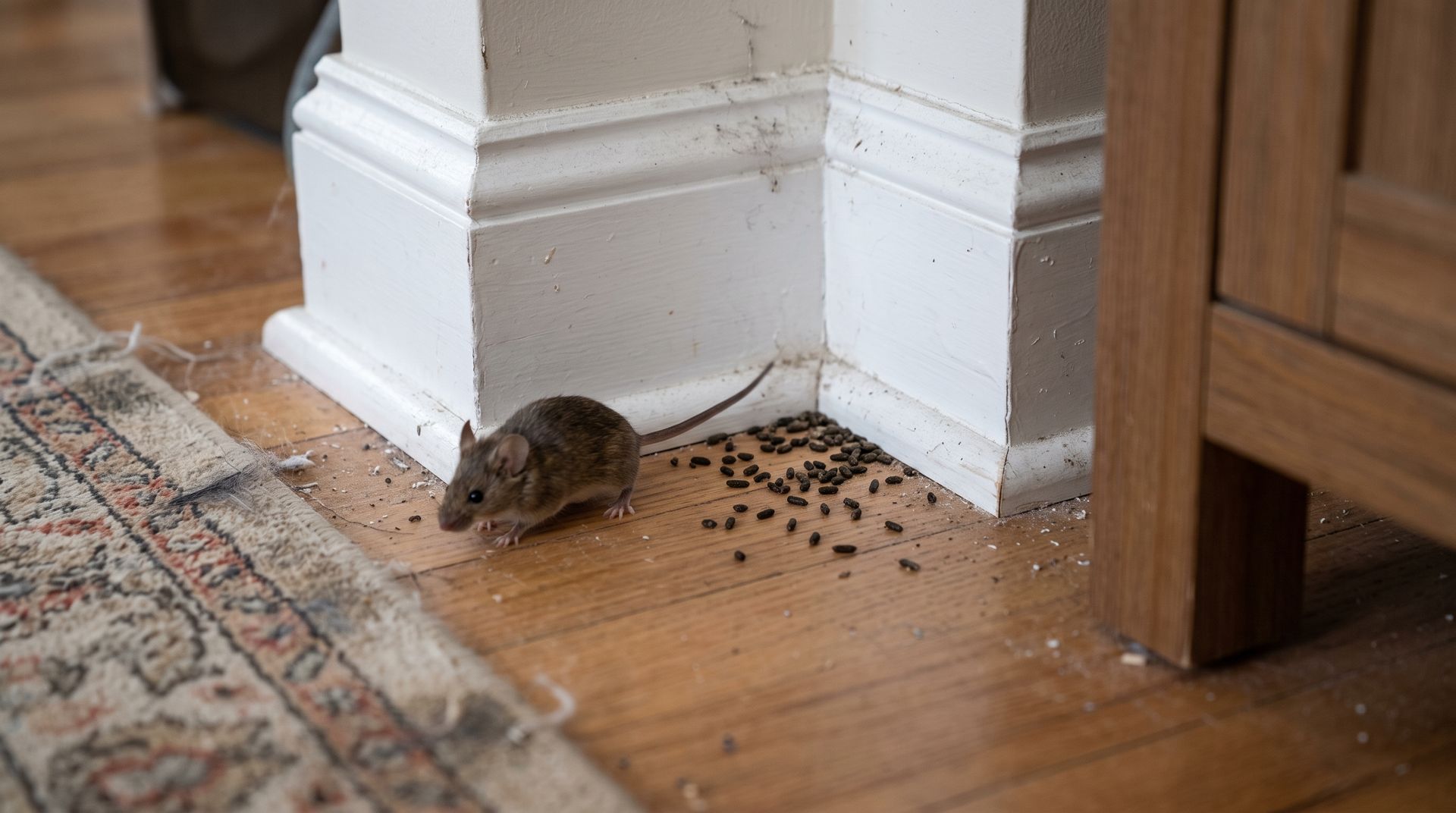
- Tiny droppings along baseboards, under sinks, or behind boxes
- Gnawed corners of bags, cardboard, or even wiring insulation
- Shredded paper or fabric that may be used as nesting materials
Once you spot one or two of these, take it seriously. A small problem can quickly turn into multiple nests before winter even peaks.

Droppings Along Walls
Small, pellet-like droppings near baseboards, behind boxes, or under sinks often appear before you ever see a mouse.

Gnawed Materials
Chewed corners of food bags, cardboard, or even wiring insulation indicate mice are actively moving through your basement.

Nesting Materials
Shredded paper, fabric, or insulation can signal a nest starting to form—often hidden behind storage bins or appliances.
How to Keep Mice Out Without DIY Mistakes
We often hear about people wasting time and money on gadgets or traps that only offer a short-term fix or end up ignored by the mice altogether. The truth is, keeping mice out for good means focusing on prevention first and knowing when to call in help.
Here are a few proven steps that work over time:
- Close every gap using long-lasting sealants, like steel wool inside cracks, not just foam or old rags
- Keep floors and storage shelves clean, especially around food or pet items
- Avoid stack-ups of cardboard boxes or unused furniture that create ideal nests
And when mousetraps keep coming up empty or noises won’t stop, it’s time to reach out for expert mice removal. Trained pros can help spot what you missed and guide you toward safer, longer-term fixes.
What to Expect from Expert Help
Sometimes, no matter how careful we are, the mice still find a way inside. Once they’ve gotten in and settled down, it can be hard to get them out without real experience and training.
Professionals usually follow a clear process like this:
- Careful inspection of basements to find hidden nests and entry points
- Traps or sanitized bait stations set up in safe, out-of-reach places for pets and children
- Monitoring plans that help prevent new mice from returning
We offer mouse control through our Quarterly Pest Control Program, which includes four services per year to manage spiders, common household insects, mice, rats, and meadow voles in and around your home. For many Lancaster County homeowners, this type of ongoing protection is budget-friendly, with pest control service plans starting at $35 per month.
This approach lets us fix the problem from more than one angle. It’s not just about catching the ones already inside, but also about keeping new ones from sneaking in later.
A Quieter Winter Starts Below the Floor
The basement might seem like the last place pests would show up, but once winter hits, it’s one of the first places mice look for shelter. With their ability to slip through tiny cracks and move quietly, you might not know they’ve arrived until they’re well settled.
By learning where and why mice enter, spotting the early signs, and focusing more on sealing and less on makeshift traps, you give your home a chance to stay peaceful all winter. And if things still feel off, professionals can help find what’s hidden and help keep the problem from coming back.
When you notice mice invading your basement or see the first signs of an infestation, acting quickly is smart. Winter in Pennsylvania makes your home even more inviting to these rodents, and after they settle in, it gets tougher to keep them out. Our approach combines fast response with proven long-term strategies for effective results. Discover how our approach to
mice removal can help protect your home,
contact us today.
A good plan removes active mice and blocks repeat entry—safely and consistently.
Find gaps, rub marks, droppings routes, and hidden nesting areas.
Placed strategically and out of reach for kids and pets.
Stops the next wave by addressing what allowed entry in the first place.
(plan pricing varies)
Quarterly program = 4 visits/year
Great for homeowners who want steady control for mice, rats, and common household pests.